
Professional Roofing Systems in Melbourne
- Home
- /
- Roofing Systems
Professional pitched and flat deck roofing for commercial builds across Melbourne. We install each roofing system with careful attention to roof pitch, drainage, flashing and transition details.
Our Services
Our Working Process
- Plan & Prepare
- Install with Precision
- Inspect & Handover
How we can help you?
Need a new Colorbond roof, re-roofing, architectural cladding or roof plumbing work? Speak with our experienced team for honest advice and a free quote tailored to your project.
Contact Us
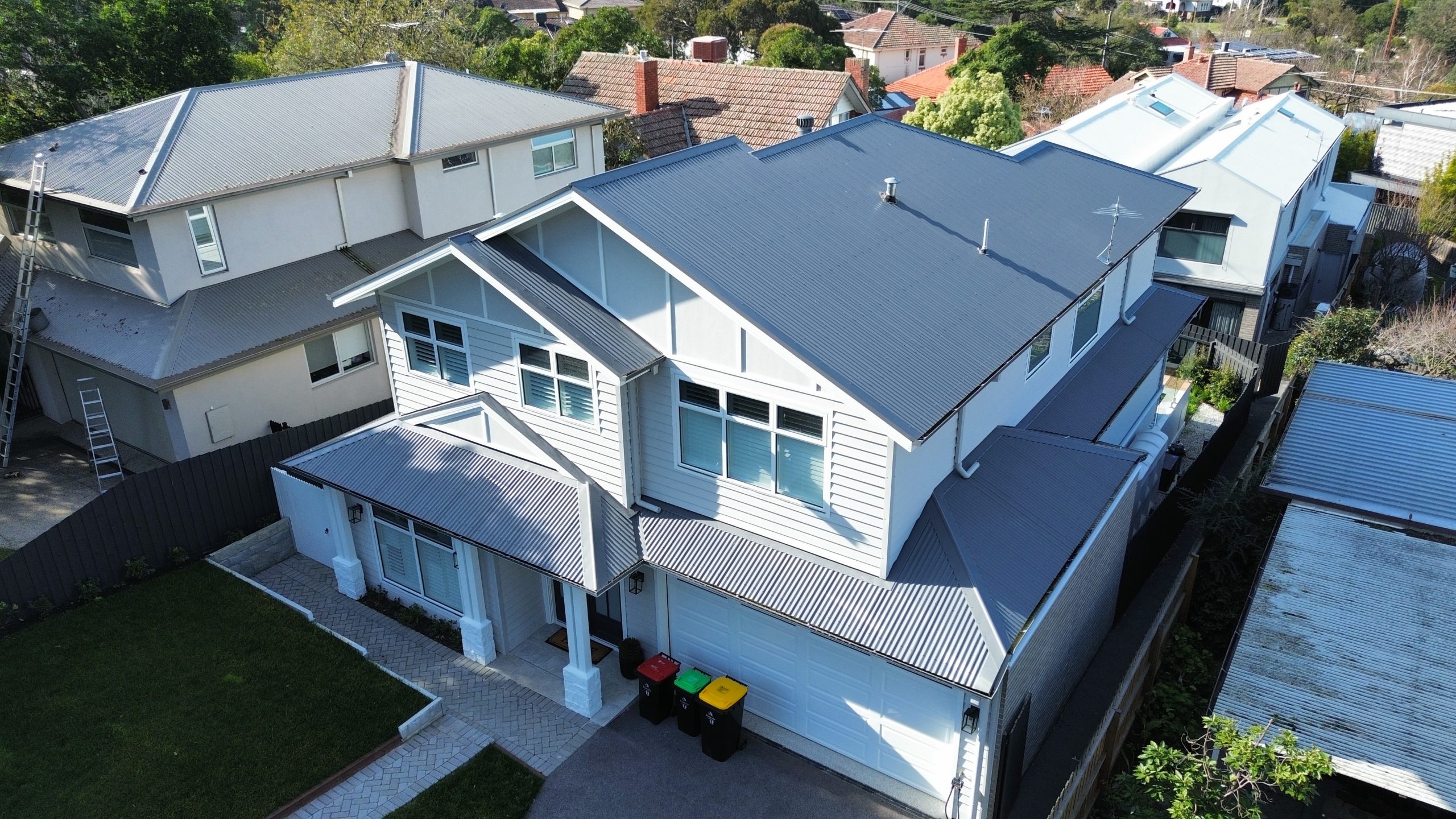
Pitched and Flat Deck Roofing Solutions
Many projects combine a pitched roof over the main structure with a flat deck or low-pitch roof over a garage, extension, balcony or contemporary architectural feature. Although these systems often appear on the same building, they manage water differently and require distinct installation methods.
We install both pitched and flat deck roofing as one coordinated system. This gives us control over the critical junctions between roof sections, reducing the risk of gaps in responsibility, unsuitable flashing or poorly planned drainage. Every roof is assessed according to its profile, pitch, geometry and expected water flow.
Our Roofing Systems Installation Process
High-end architectural builds require roofing that performs reliably without compromising the design. Corrugated metal roofing gives builders, developers and project managers flexibility across traditional and modern commercial forms.
1. Selecting the Correct Roof Pitch and Profile
Every roofing profile has a minimum recommended pitch. Corrugated roofing performs well on steeper roof forms, but it becomes less suitable as the pitch decreases.
2. Planning Roof Drainage
Roof size, pitch and local rainfall intensity all influence gutter and downpipe requirements. These components need to be sized for the volume and speed of water leaving the roof.
3. Installing Pitched Roof Flashings
Ridges, hips, valleys, barges, penetrations and roof-to-wall connections require carefully formed and positioned flashings. Valleys and wall junctions are particularly vulnerable because they concentrate water in smaller areas.
4. Roofing Complex Architectural Designs
High-end architectural builds often include multiple hips, valleys, roof levels and changes of plane. Every transition introduces another detail that must be accurately measured, formed and installed.
Frequently Asked Questions
What's the minimum pitch for a corrugated roof?
It depends on the profile and the sheet length, and the manufacturer sets it. The short version is that corrugated wants more pitch than a trapezoidal profile. If your design pitch is marginal we’ll tell you at quoting and suggest a profile that suits.
Is a flat roof actually flat?
No. It’s a low-pitch roof with a deliberate fall to the drainage points. Anything genuinely flat will pond, and ponding is what kills flat roofs.
Why do flat decks leak more than pitched roofs?
They don’t, if they’re set out and detailed properly. They’re less forgiving. A pitched roof sheds water regardless of small errors; a low-pitch roof relies on the falls and the lap detail being right.
Can you do both systems on the one build?
Yes, and it’s most of what we do. The junction between them is the reason it’s worth having one trade across both.
Do you size the gutters and downpipes?
Yes, off the roof area, pitch and rainfall data rather than a rule of thumb. Undersized drainage is a warranty call waiting to happen.
Can you work to an architect's roof detail?
Yes. Send the details with the drawings and we’ll quote to them and flag anything we think won’t perform.